

Trump-Modi Talks Seal Major Trade Breakthrough: US Cuts Tariffs to 18%, New India-US Deal Reshapes Global Trade
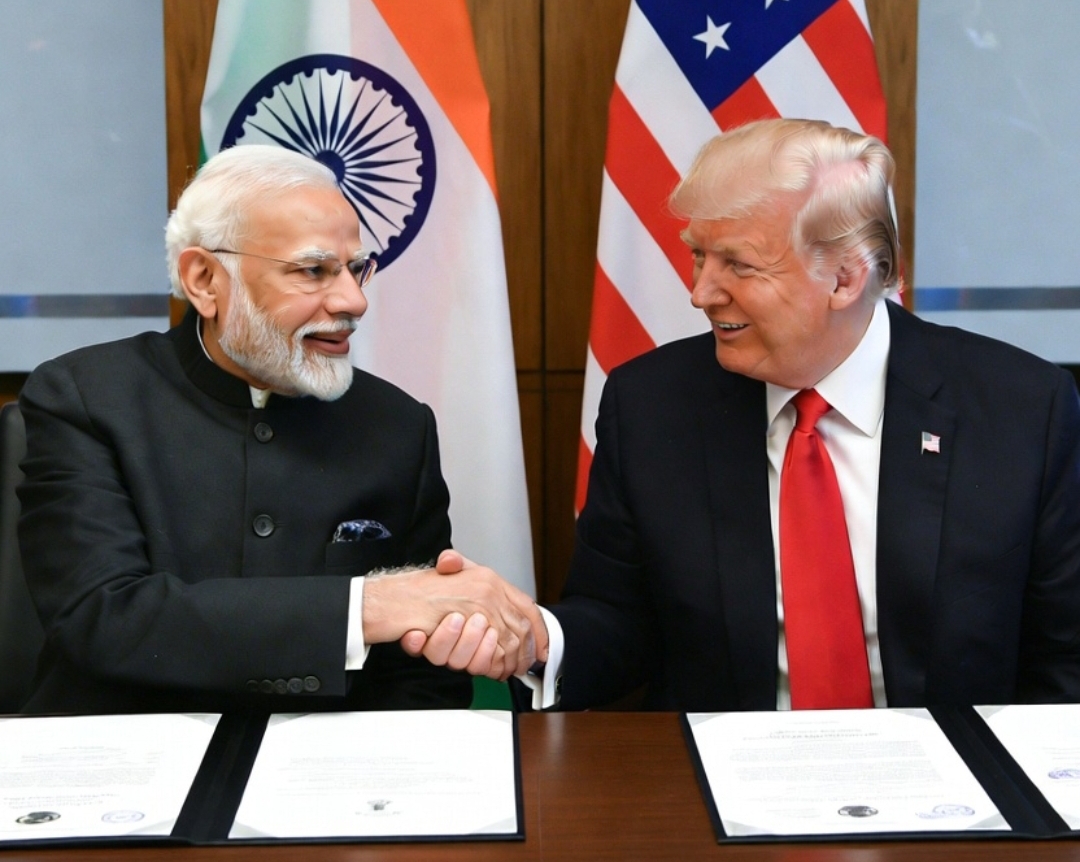
In a major development for global trade and geopolitics, US President Donald Trump and Indian Prime Minister Narendra Modi reached a new trade understanding following a telephonic conversation on February 2, 2026. The announcement, made by President Trump on his social media platform Truth Social, signals a potential reset in US-India trade relations after months of tariff tensions and strategic disagreements.
The Trump-Modi talks focused on tariff reductions, market access, energy sourcing, and broader trade cooperation. The agreement has triggered mixed reactions worldwide—ranging from optimism among exporters and markets to criticism over strategic and economic trade-offs.
Key Highlights of the Trump-Modi Trade Understanding
At the heart of the agreement is a significant reduction in US tariffs on Indian goods. President Trump confirmed that the United States has lowered its reciprocal tariff rate on Indian exports from 25% to 18%, effective immediately. This move effectively removes additional punitive duties that had earlier pushed the effective tariff burden much higher amid disputes over energy imports and trade imbalances.
Trump described the decision as a gesture made “out of friendship and respect” for Prime Minister Modi, underlining the personal diplomacy that continues to shape US-India relations.
In return, India has committed to reducing tariffs and non-tariff barriers on several American products, with officials indicating a move toward near-zero barriers in select sectors. This step is expected to open Indian markets further to US agricultural goods, energy products, and manufactured items.
Energy and Strategic Commitments
Beyond tariffs, the deal includes significant energy-related commitments. India has reportedly agreed to scale back and halt purchases of Russian crude oil, shifting its energy sourcing toward the United States and other suppliers. This move aligns with Washington’s broader strategy to economically isolate Russia amid ongoing global conflicts and diplomatic negotiations.
The energy shift is being seen as a major geopolitical signal, indicating India’s gradual recalibration of its long-standing energy ties in response to global pressures.
President Trump also claimed that the agreement could unlock trade opportunities worth up to $500 billion in American exports over time, though detailed timelines and sector-wise breakdowns have not yet been disclosed.
India’s Response and Official Reactions
Prime Minister Narendra Modi welcomed the agreement, stating that reduced tariffs would benefit “Made in India” products and strengthen bilateral trade. In a public message, Modi thanked President Trump on behalf of India’s 1.4 billion people, framing the deal as a boost for Indian exporters and small businesses.
Union Commerce Minister Piyush Goyal and IT Minister Ashwini Vaishnaw echoed similar sentiments, highlighting new opportunities for MSMEs, exporters, and technology firms. Officials described the outcome as a “win-win” arrangement that balances trade relief with long-term cooperation.
Global Reactions: Optimism and Skepticism
The Trump-Modi trade deal has drawn sharply divided reactions.
Positive Outlook:
Supporters see the agreement as a diplomatic win for India, achieved amid intense US pressure. Export-oriented sectors such as IT services, pharmaceuticals, textiles, and manufacturing are expected to benefit from lower US tariffs. Market analysts anticipate short-term gains for Indian equities, particularly export-heavy stocks.
International observers have described the agreement as a long-awaited trade truce that could reshape supply chains and influence global energy markets.
Critical Voices:
Critics argue that the deal remains asymmetrical. While the US continues to impose an 18% tariff on Indian goods, India’s move toward zero barriers could expose domestic industries to increased competition. Some analysts point out that tariff levels remain significantly higher than pre-Trump averages, questioning the narrative of a major concession.
Geopolitical experts have also raised concerns over India’s reduced energy flexibility, noting that Russian oil had provided cost advantages and price stability. Others describe the agreement as an interim arrangement, suggesting it serves immediate political interests rather than delivering long-term structural gains.
Broader Economic and Geopolitical Implications
US-India bilateral trade currently exceeds $190 billion annually, and the agreement could push volumes higher if fully implemented. However, its long-term success will depend on execution, sector-specific negotiations, and domestic political responses in both countries.
Strategically, the deal signals India’s closer alignment with the US and Quad partners, potentially strengthening collective positioning in the Indo-Pacific region. At the same time, rising energy costs and concerns over domestic job protection could spark internal debates within India.
Conclusion
The Trump-Modi trade agreement represents a pragmatic compromise in an increasingly volatile global environment. While it delivers immediate tariff relief and renewed trade momentum, it also introduces strategic and economic trade-offs that will be closely scrutinized in the months ahead.
Whether this deal evolves into a lasting trade partnership or remains a temporary truce will ultimately depend on implementation, transparency, and the ability of both nations to translate promises into measurable economic gains.