


Introduction: A Global Lifeline in Danger
The has become the focal point of a major geopolitical crisis in 2026. As tensions escalate between , the , and , this narrow waterway is now under severe threat.
This strait is not just a regional passage—it is the backbone of global energy supply. Any disruption here has immediate consequences for economies, governments, and everyday life across the world.
Why the Strait of Hormuz Is So Important
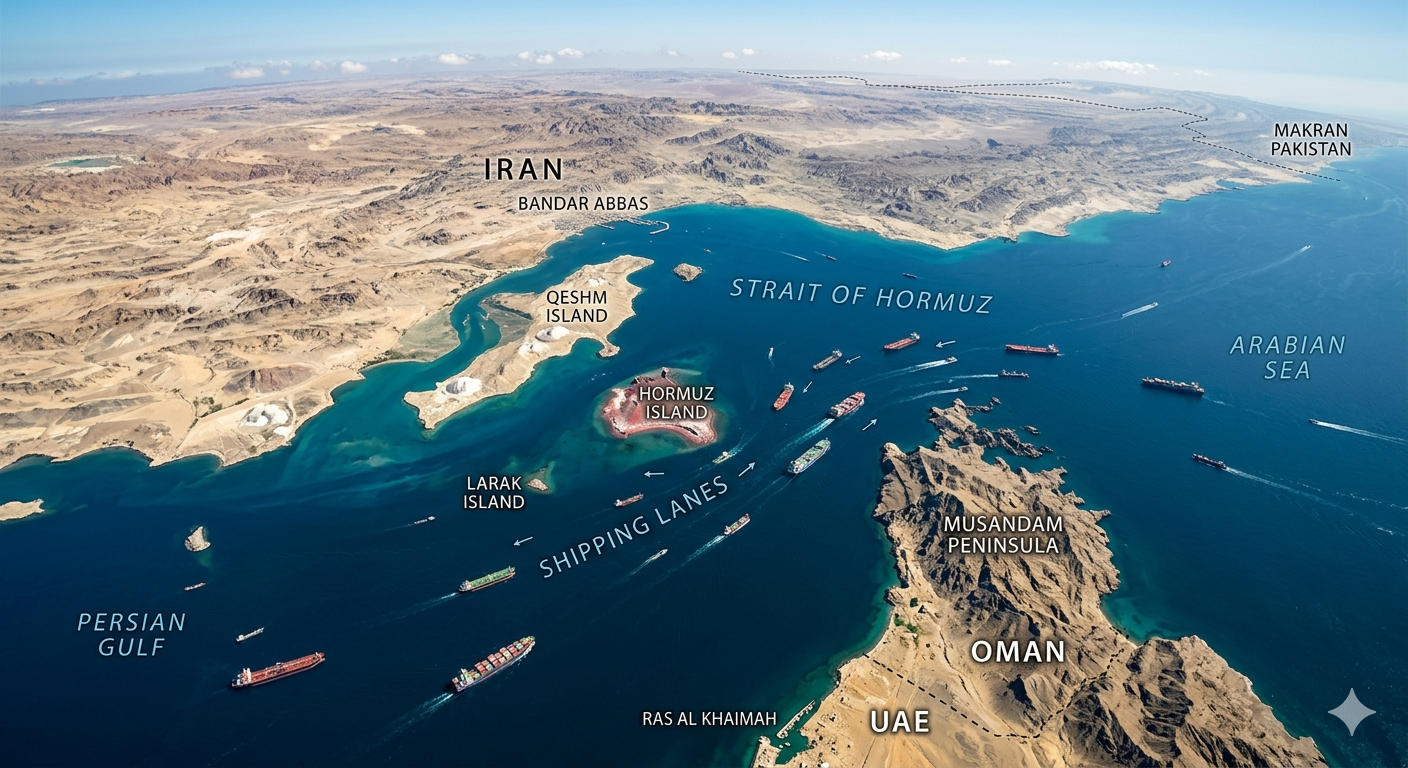
The Strait of Hormuz connects the with the , acting as the main exit route for oil produced in the Gulf region.
Nearly one-fifth of the world’s oil supply passes through this narrow corridor every day. In addition, a significant portion of global natural gas shipments also moves through this route.
Major oil-exporting countries such as , , , and the depend heavily on this passage. At the same time, energy-importing nations like and rely on uninterrupted flow through Hormuz.
What makes it critical is that there are no fully capable alternatives. Pipelines and other routes cannot replace the massive volume transported daily through this strait.
What Is Happening Now in 2026
The ongoing tensions linked to the Iran–US–Israel conflict have brought the Strait of Hormuz into a dangerous phase. Iran has tightened control and restricted movement of ships, citing security threats and foreign military presence in the region.
Reports of tanker disruptions, military drills, and rising naval activity have increased uncertainty. Even without a complete closure, the strait has effectively become a high-risk zone, reducing normal shipping operations.
The presence of the and allied forces has increased, aiming to secure safe passage. However, the situation remains volatile and unpredictable.
Who Is Restricting the Strait—and Why?
Iran’s Position
Iran controls the northern coastline of the Strait of Hormuz, giving it a strategic advantage.
Its reasons for restricting the strait include:
- Responding to economic sanctions and military pressure
- Countering the presence of US forces in nearby waters
- Reacting to regional tensions involving Israel
Iran views the strait as a strategic leverage point. By disrupting oil flow, it can exert pressure not just on its adversaries but on the entire global economy.
Role of the United States and Israel
The United States is working to ensure that global shipping remains uninterrupted, as the free flow of oil is vital for global stability.
Israel’s involvement in the broader regional conflict has intensified tensions, indirectly contributing to the situation in Hormuz. The growing confrontation has turned the strait into a sensitive military zone.
Why the Strait Becomes a Target During War
The Strait of Hormuz is one of the most effective pressure points in any Middle East conflict because:
- It directly impacts global oil supply
- It creates immediate economic consequences worldwide
- It allows strategic influence without full-scale war
Even limited disruptions can trigger global reactions, making it a powerful geopolitical tool.
Global Impact of the Crisis
1. Oil Price Surge
Any disruption in Hormuz leads to immediate spikes in oil prices due to supply uncertainty.
2. Inflation Across Countries
Rising fuel costs increase transportation and production expenses, leading to higher prices for goods and services worldwide.
3. Economic Instability
Stock markets react negatively, currencies fluctuate, and investors shift toward safer assets like gold.
4. Impact on India
For , the effects are direct and significant:
- Increased fuel prices
- Pressure on government subsidies
- Rising inflation affecting daily life
Military Challenges in Securing the Strait
Securing the Strait of Hormuz is extremely difficult due to its geography and military dynamics.
Iran has developed capabilities such as:
- Naval mines
- Anti-ship missiles
- Fast attack boats and drones
Even without full closure, these tools can make the strait unsafe for commercial shipping.
This makes disruption easier than protection, even for powerful navies.
Long-Term Risks for the World
If the crisis continues:
- Global energy shortages may intensify
- Economic growth could slow down significantly
- Supply chains may face prolonged disruptions
- Developing economies could face severe financial pressure
A prolonged crisis in Hormuz could push the global economy toward instability or even recession.
Conclusion
The Strait of Hormuz is not just an important route—it is essential for the functioning of the modern world.
In the current Iran–US–Israel conflict scenario, it has become a powerful geopolitical flashpoint. Control over this narrow passage can influence global oil prices, economic stability, and international relations.
As tensions continue, the future of the Strait of Hormuz will play a decisive role in shaping both the outcome of the conflict and the stability of the global economy.
