


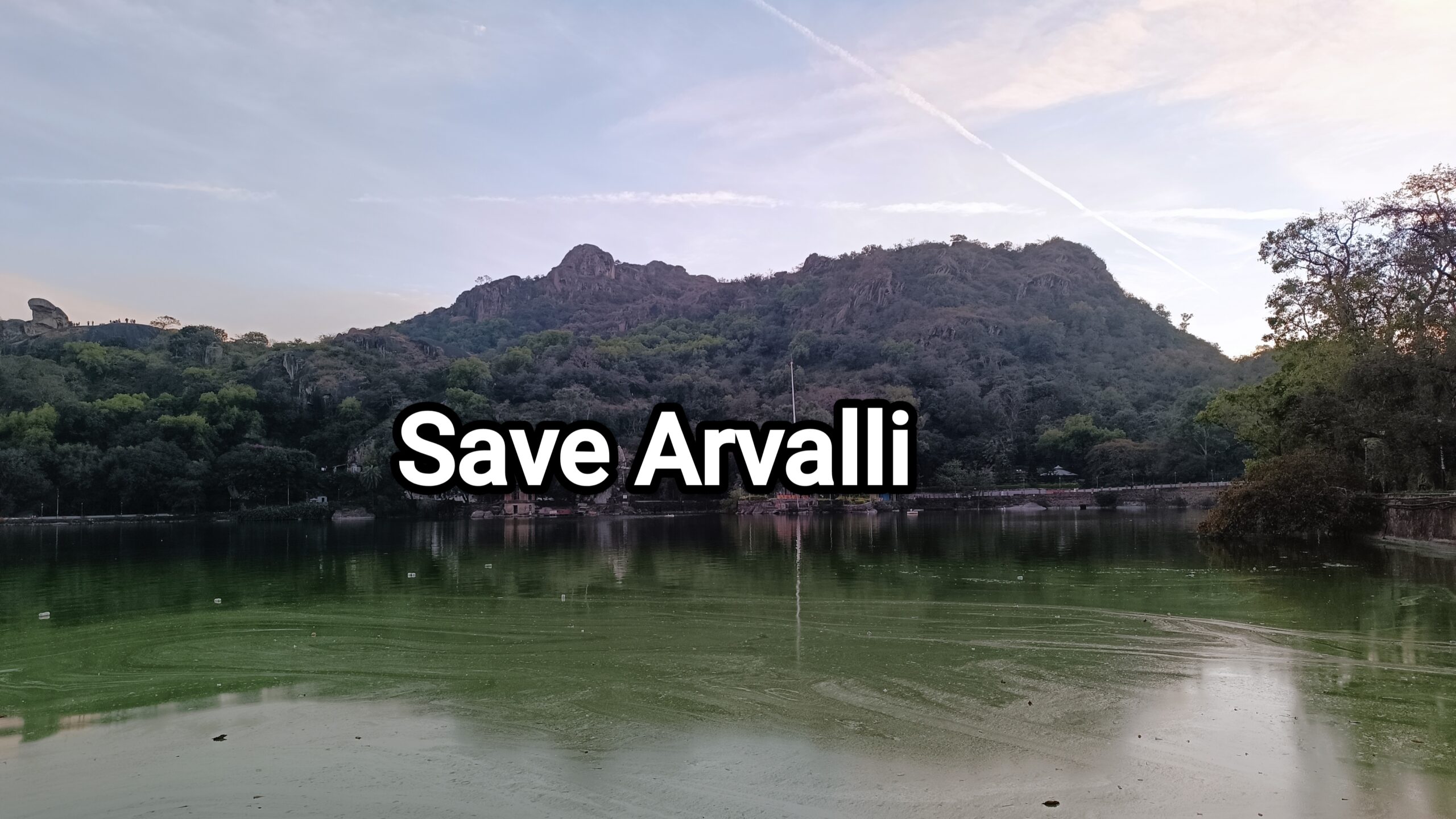
New Delhi, 23 December 2025 – The dispute over protection and definition of the Aravalli mountain range has resurged with renewed intensity, as environmentalists, political figures, and civil society escalate demands for fresh judicial scrutiny of the Supreme Court’s recent decision on the range’s definition. The controversy, which has triggered nationwide debate, street protests, and digital campaigns, now has legal, environmental, and political dimensions that go beyond the courtroom.
At the heart of the current upheaval is the Supreme Court’s acceptance, in November 2025, of a uniform definition for identifying hills and ranges within the Aravalli system based on an elevation-based criterion. According to this framework, only those landforms that rise 100 metres or more above the surrounding local relief and clusters of two or more such hills within 500 metres of each other are formally designated as part of the Aravalli Range. Critics argue this criteria could exclude vast swathes of ecologically vital terrain from legal protection, leaving them vulnerable to development pressures.
Proponents of the earlier ruling maintain it brings clarity to a long-standing regulatory ambiguity—however, opponents see it as weakening safeguards for a mountain system regarded as the “green lungs” of northern India.
Supreme Court Review Demand and Letter to CJI & President
Renewed public and activist pressure comes after environmental lawyer and advocate Hitendra Gandhi filed a representation urging the Supreme Court to revisit its treatment of the so-called “100-metre rule.” Addressed to Chief Justice of India Surya Kant and also sent to the President of India, the petition argues that a strict numerical threshold fails to account for the functional ecological contributions of lower hills, foothills, and slopes that are critical for groundwater recharge, biodiversity, and climate moderation.
Legal experts say that although the Supreme Court’s decision stands, avenues such as a Review Petition remain available if it can be demonstrated that the decision undermines public interest or environmental protection obligations. Such a petition could prompt the court to reconsider or clarify its interpretation. Analysts note that the court has previously entertained complex environmental issues when presented with significant evidence or broader interdisciplinary concern.
Government Position: No Relaxation, Protection “Intact”
In response to widespread alarm, the Ministry of Environment, Forest & Climate Change (MoEFCC) and the Union Environment Minister Bhupender Yadav have repeatedly sought to reassure the public. Officials emphasize that the Supreme Court-approved framework protects over 90% of the Aravalli region, and that the existing freeze on new mining leases remains in place until a management plan for sustainable mining is finalized.
Minister Yadav clarified in recent media briefings that the revised definition is not intended to weaken protections but to improve regulatory clarity and enforcement. He stated that no new mining leases will be granted across the Aravalli hills and that a detailed, district-wise conservation and management plan is being developed in collaboration with the Indian Council of Forestry Research and Education (ICFRE).
In press interactions, Yadav also challenged what he described as misinformation spread by some media and online channels, reinforcing that ecological safeguards remain firm even as administrative definitions evolve.
Public Reaction: Protests and Online Outrage
The reaction among the public has been swift and intense. Across social and traditional media, hashtags like #SaveAravalli and #ProtectGreenIndia have gone viral, as protests spread from digital platforms to physical rallies and sit-ins in cities such as Jaipur, Udaipur, and Gurugram.
Activists warn that excluding lower hills from the legal definition could have far-reaching ecological consequences, making them susceptible to construction and extractive pressures. Street demonstrations have been accompanied by online campaigns, petitions, and signature drives calling for a comprehensive ecological re-evaluation rather than a purely geometric threshold.
Several civic groups have drawn attention to historical data from the Forest Survey of India, which indicates that a significant portion of the region’s hills lie below the 100-metre mark—terrain regarded by many as functionally indispensable for groundwater recharge and dust storm mitigation.
Expert Views: Ecological and Legal Perspectives
Environmental specialists, urban planners, and conservationists have voiced serious concerns:
- Dr. Anita Sharma, Environmental Scientist: “The Aravalli hills are more than geological formations—they are a complex living system. Excluding lower elevations on paper undermines decades of ecosystem service that sustain life in the NCR and beyond.”
- Legal Analyst P. R. Verma: “The apex court retains the power to revisit its interpretation if presented with credible evidence that the decision jeopardizes fundamental environmental principles. A coherent Review Petition could open that door.”
Broadly, experts agree that while regulatory definitions should aid enforcement, they must not compromise protection of critical ecological functions.
Political Echoes and Broader Debate
The Aravalli issue has also seeped into the political arena. Leaders across parties have engaged in debate, with some expressing concerns about environmental stewardship and others defending the government’s balance of ecological and economic interests. The debate has heightened political engagement, particularly in regions that directly border or encompass segments of the Aravalli system.
Looking Ahead: What’s at Stake?
The Aravalli range’s protection lies at the intersection of law, environment, and public policy. As debates continue in courtrooms, protest grounds, and government offices, one point is clear: the outcome of this controversy will shape not just regulatory practice but how India balances ecological heritage with development imperatives for decades to come.
With public scrutiny high and legal challenges underway, the nation watches whether the Supreme Court will grant a fresh hearing or clarification that could reaffirm broader protections for one of its most critical natural assets.