


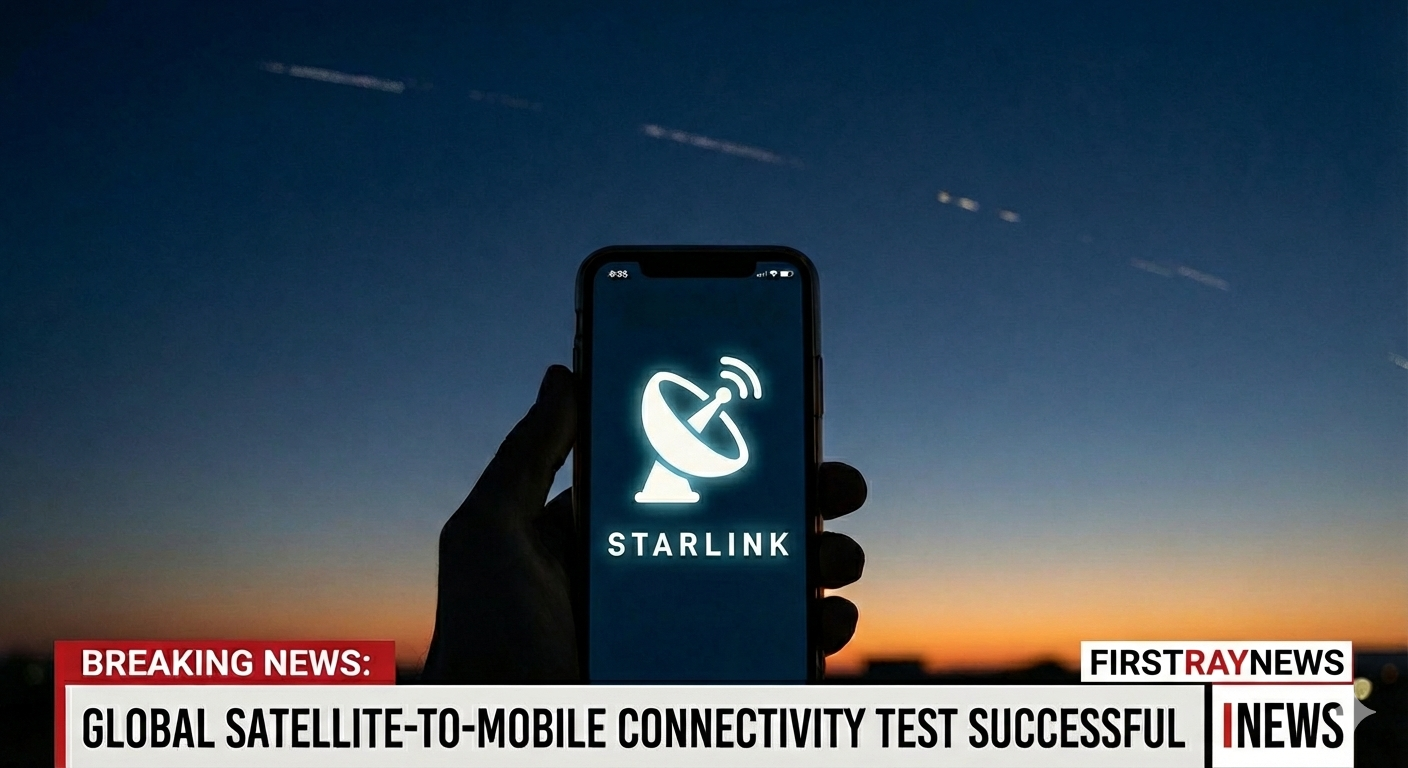
Starlink has taken a bold leap into the future of communication by launching its new mobile satellite internet service, a system designed to connect directly to regular smartphones without any installation, antenna, or new device. This breakthrough, known as Direct-to-Cell, transforms the way users stay connected in areas where traditional mobile networks fail — from remote mountains to deep rural regions, highways, and disaster zones.
For years, satellite internet required bulky hardware or special devices, keeping it out of reach for most everyday users. Starlink’s latest innovation flips that reality. Now, a standard 4G/5G smartphone can automatically latch onto satellites when terrestrial networks are unavailable. No app, no SIM change, and no setup process — the phone simply switches to the Starlink signal the moment your carrier coverage disappears.
How the technology works
The heart of this breakthrough lies in Starlink’s next-generation low-earth-orbit satellites, equipped with advanced phased-array antennas. These satellites mimic traditional mobile towers but from space, enabling them to communicate with ordinary LTE/5G phones. The data is routed through the Starlink constellation and then linked back to ground networks, making the entire process seamless for the end user.
Because all the innovation happens in the satellite and backend infrastructure, the user’s phone stays exactly the same. This “no-hardware-change” approach is what makes Starlink’s launch so disruptive — it removes friction and makes satellite connectivity as easy as turning on mobile data.
Why this matters for mobile operators
Starlink is not entering the mobile market alone. The new service relies on partnerships with telecom operators around the world, allowing the satellite network to integrate with existing carrier infrastructure. For operators, this offers an attractive opportunity: expanded coverage without building new towers, reaching remote terrain, and offering customers a safety net where normal networks cannot reach.
For countries with vast rural or hard-to-reach landscapes, this technology could be transformative. It allows carriers to market “coverage everywhere” without committing to massive physical expansion.
Real-world use cases
The launch of Starlink’s mobile satellite internet opens the door for a wide range of practical benefits:
1. Emergency and disaster response
In cyclone-hit regions, earthquake zones, or flooded areas where towers go down, phones will still stay connected, allowing relief teams and affected people to communicate instantly.
2. Travelers and explorers
Hikers, bikers, road trippers, and trekkers will no longer lose connectivity when they leave the city grid. A simple smartphone becomes a global communication tool.
3. Remote workers and rural communities
From desert villages to offshore worksites, reliable connectivity can boost productivity and access to digital services like telehealth and online education.
4. Maritime users
Boaters and fishermen often face signal blackouts. Direct-to-Cell gives them dependable coverage far from the shoreline.
Current limitations — and what comes next
While revolutionary, the service will roll out in phases. Initial capabilities focus on text messaging and low-bandwidth data, perfect for communication but not yet intended for high-speed streaming or large downloads on a phone. As more satellites with Direct-to-Cell hardware are launched, capacity will increase and future updates are expected to support voice calling, broadband-level internet, and richer online services from space.
Performance may vary based on local regulations, satellite availability, and demand congestion, but the direction is clear: satellite connectivity is becoming an everyday mobile feature rather than a niche emergency solution.
A new era of on-the-go connectivity
By removing all the traditional barriers — installations, antennas, dedicated devices — Starlink positions itself as a global game-changer. The idea that your phone can stay connected anywhere the sky is visible marks a major shift in the telecom landscape. Whether you’re traveling, working, adventuring, or responding to a crisis, the ability to stay online without relying on ground networks unlocks a new level of freedom and safety.
Starlink’s mobile satellite internet isn’t just a new service — it represents the next chapter of global connectivity, where the sky becomes your network and communication has no boundaries.